
Most magnetic jobs in this hobby are light ones: a model that should sit still on a slope, a hatch you want to pop off, scatter terrain that shouldn't slide when the table gets bumped. You don't need forged or milled steel for that. You can print the part from ferromagnetic iron PLA and let a magnet do the rest.
Iron PLA is real iron powder blended into PLA, which makes it genuinely ferromagnetic: it responds to magnets and behaves much like pure iron. It isn't a magnet itself; it's the iron surface a magnet grabs. That one property makes it a tidy shortcut for magnet-ready terrain.
Why it works for terrain floors
Print a floor — a bunker deck, a ruined tile, a cargo bay, a tight interior corridor board — in iron PLA, and any model with a magnet in its base holds to it wherever it stands. No drilled holes in the board, no steel sheet glued underneath, no visible hardware. The whole surface is the magnetic catch. That works the same for Warhammer 40,000 ruins, Age of Sigmar realm terrain, Horus Heresy (30k) compounds, and general wargaming scatter — the game doesn't matter, only that your models or pieces carry a magnet.
It's also the practical call over metalwork. Rather than forging, casting, or milling steel for what is really a mild magnetic hold, you print the exact shape you want in iron PLA and pair it with a strong magnet. Cheaper, lighter, and you can make it on the printer you already own.
Print it to actually hold
Holding power comes from how much iron sits under the magnet, so two settings matter most:
- Thickness: aim for a floor 2–3 mm thick where the magnet will sit. Thinner, and there isn't enough iron in the wall for a confident grab.
- Infill: print at 100% infill. A solid cross-section keeps iron directly beneath the contact point instead of air gaps — the difference between a firm hold and a weak one.
On temperature, the baseline nozzle range is 185–215 °C. In practice, while you're laying down all that solid infill, run hotter — around 220–230 °C — so the material flows consistently and the layers bond well. That's especially true with a hardened steel nozzle, which pulls heat away from the melt and effectively prints a little cool at the same setpoint. Keep the first layer hot for adhesion.
A few more settings that matter:
- Bed: room temperature up to 60 °C; hotter can make warp worse.
- Nozzle wear: the iron is more abrasive than standard PLA, so a hardened or wear-resistant nozzle is worth it for repeated terrain printing; plan on replacing plain brass eventually.
- Nozzle size: 0.6 mm or larger is preferred, 0.4 mm is fine; very small nozzles clog.
- Layer height: 0.15–0.20 mm balances quality and reliability.
- Handling: as a filament it's a little more brittle than normal PLA and roughly 1.5× as dense (about 1.85 g/cc), so feed it gently and expect heavier parts.
Pair it with N52 neodymium magnets
Because the printed floor only responds to a magnet, the hold is only as strong as the magnet you put in the model or base. We recommend high-strength N52 neodymium magnets — they give the firmest grab for the size, which matters when the iron is encased in plastic and the contact is through a base. Disc magnets suit infantry and light scatter; larger discs or blocks handle vehicles and heavier pieces. Seat the magnet in the model and let the iron PLA surface be what it locks onto.
Finishing, sealing, and rust
As printed, iron PLA keeps a stable matte, cast-metal look that already reads as bare metal on a table. If you want a weathered deck, the iron can be rusted to a genuine patina. The rust will rub off unless you seal it, so once you like the finish, lock it in with a matte clear coat or fixative.
Sealing matters for storage too. Exposed iron PLA can develop surface rust on its own in damp conditions, so if your terrain lives somewhere humid, a sealing coat keeps unwanted rust off the parts you didn't mean to age.
Other places it earns its spot
- Removable hatches, doors, and roof panels that lift off a printed building
- Objective markers and tokens that won't slide off the board
- Modular board tiles where magnetized scatter can be rearranged between games
- Display bases and dioramas that hold posed, magnetized models
Common questions
Is the filament magnetic? No — it's ferromagnetic. It's strongly attracted to magnets and acts like iron, but it doesn't become a magnet, so two printed pieces won't stick to each other.
How thick should the floor be? 2–3 mm at the contact area, printed at 100% infill, gives a reliable hold.
Do I need a special nozzle? The iron is abrasive. A hardened or wear-resistant nozzle is the safe choice for repeated printing; standard nozzles work but wear faster.
Which magnets should I use? N52 neodymium for the strongest hold at a given size. Match the magnet diameter to the model's base or the part's footprint.
Will it rust by accident? It can in humid storage. A matte sealer prevents both accidental rust and rub-off on intentionally rusted pieces.
Get the materials
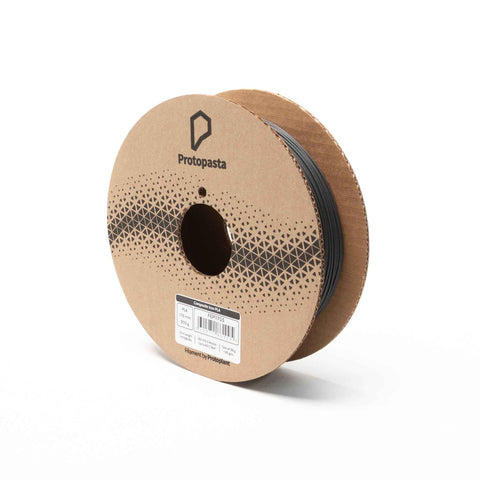
Pair it with high-strength N52 neodymium super magnets sized to your bases and parts.