Pin Vise vs. Power Drill: Which Is Best for Magnetizing Miniatures?
You need to drill holes in your miniatures to seat magnets. The question is whether to use a hand-operated pin vise or a powered rotary tool like a Dremel. Here's the straightforward comparison.
What Is a Pin Vise?
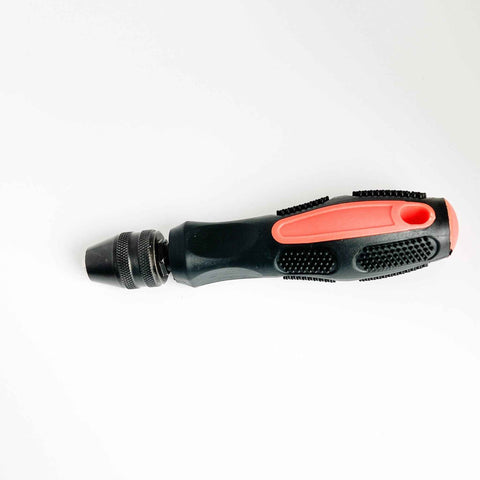
A pin vise is a small hand drill designed for precision work. You insert a drill bit into the collet, tighten it, and twist the handle to drill. It's the standard tool for miniature magnetization, and for good reason.
Pin Vise Advantages
Precision and Control
A pin vise lets you feel exactly how deep you're drilling and how much material you're removing. You control the speed and pressure with your fingers. This matters when you're drilling into a 2mm-thick piece of plastic — there's almost no margin for error.
No Risk of Cracking or Melting Plastic
Power drills spin fast. Fast spinning generates heat. Heat softens and melts plastic. A pin vise turns slowly enough that this is never a concern. You also won't crack thin walls or blow through the other side of a joint because you can stop the instant you feel resistance change.
Portability
A pin vise fits in your pocket. No power cord, no battery, no noise. You can magnetize at a hobby night, at a tournament, or on the couch.
Cost
A quality pin vise costs a fraction of a powered rotary tool. No accessories to buy, no bits to replace constantly from overheating.
Power Drill Advantages
Speed for Large Batches
If you're drilling the same hole in 100 identical bases or terrain pieces, a powered drill will save time. For assembly-line work with low precision requirements, speed matters.
Large Holes
Drilling an 8mm or 10mm hole by hand is genuinely tedious. For large magnets in vehicles, terrain, or display boards, a powered tool makes sense.
The Verdict
For magnetizing miniatures — infantry, characters, weapon options, vehicles — a pin vise is the right tool. The holes you're drilling are small (typically 2mm to 6mm), the materials are thin and fragile, and precision matters more than speed. A power drill introduces unnecessary risk for this work.
Use a power drill only when you need holes larger than 8mm, or when you're doing repetitive work on thick, durable material like MDF terrain.
For everything else, get a good pin vise with an ergonomic handle that won't cramp your hand after 20 holes.
Pair It With the Right Magnets and Bits
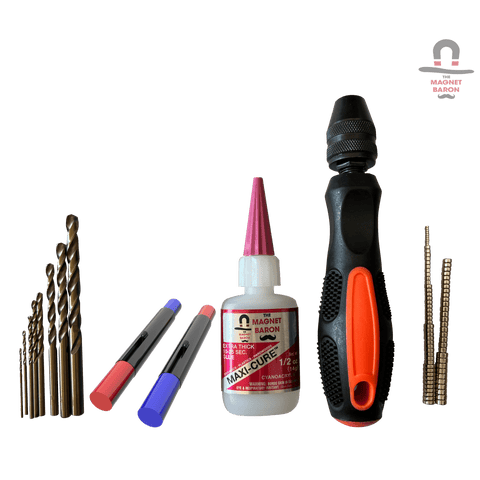
If you're just getting started with magnetizing, the Magnetization Starter Pack includes the pin vise, matched drill bits, magnets, Magnicators for polarity checking, and super glue — everything in one box.